Showing posts with label Bill Mantlo. Show all posts

Thursday, November 1, 2018

This & That: Micronauts 7; Micronauts and Man-Things...


Micronauts 7;  July 1979
Cover by Michael Golden and Neal Adams
Writer: Bill Mantlo, Pencils Michael Golden, Inks Josef Rubinstein


Redartz:  Hey folks! For many months we have planned to do a review of a Micronauts issue, and in this Halloween season, what better issue to feature than one guest starring the macabre Man-Thing? So what are we waiting for, let's get started!

To begin with, here's the capsule summary of the action (there's so much going on in here, I don't think a 100-word review will suffice). 


The main storyline opens with the Micronauts (Commander Arcturus Rann, Marionette, Prince Acroyear, Biotron, Microtron and Bug) in the company of young Steve Coffin, the son of former astronaut Ray Coffin. Long story short, they are fishing at the Coffin's Everglades retreat while hiding out after escaping from H.E.L.L.(the Human Engineering Life Laboratory) at Cape Canaveral. Steve's father worked there and fell into the Promethius Pit (a dimensional interface) and disappeared. Take my word for it.


Anyway, Steve is grieving for his missing, and feared dead, father. But recall, this is the Everglades, and therein lurks a denizen particularly sensitive to such strong emotions: the Man-Thing. Manny is attracted by Steve's grieving, and makes his way to the fishing shack. Steve, emotionally distraught, runs from the shack right into the presence of the Man-Thing. 


Of course his first reaction is terror, and as we all know, "whatever knows fear burns at the touch of the Man-Thing". The Micronauts rush to Steve's defense, but prove pretty ineffectual against the walking slime bog. 


Steve finally pulls himself together and is determined to make a stand; he fires up the swamp buggy and essentially puts the Man-Thing through a blender. Of course this doesn't harm the creature, but he feels Steve's courage and wanders off into the swamp.


Oh, and there is also a brief retelling of the Micronauts' origin...


We also follow up on Ray Coffin, who fell into the Microverse with Dr. Promethius. Promethius has gone nuts and is discovered by the villainous Baron Karza who plans to possess Promethius' body in order to invade Earth in search of the Micronauts. Also, Ray himself has been transported to the presence of the mysterious Enigma Force. Then we catch up with the rebels on Commander Rann's home world, Homeworld.  And finally, it appears Baron Karza has succeeded in reaching Earth!

Yes, all this in a  32-page comic. This would require a six issue arc, these days...
Martinex1: I could not agree more Red.  One of the things that made The Micronauts one of my favorite books was the complexity of the storytelling.  It may not be Shakespeare, but Bill Mantlo and the artistic teams sure piled a lot into every issue.  I really wish comics were still like this.  At the very least it gave me a good long read; at best it drew me into the detailed plots and intricate characterizations.   I know that the book does not carry the cache of The Avengers or The X-Men, but back in the Bronze Age this book was on par with the greats.

The Cover:

Redartz: One of the biggest attractions to this comic. This is a truly incredible cover, rich with detail and swampy moodiness. Golden's art is wonderful to begin with, and having Neal Adams inks just puts 'extra sprinkles on the frosting'. Man-Thing looks great, and that snake in the foreground could slither right off the cover.
Martinex1: I agree.  How could this not be a "must buy book?"  Golden's style has changed a bit over the years, but I really liked this era in his career.   His characters had a style that was distinct and there were always levels to the detail. Both here and on ROM Spaceknight covers, his work stood out for me.

The Story:

Redartz: First off, I love the title "Adventure into Fear." An homage to Man-Thing's first 32-page comic series. A nice touch.

As noted above, there's a lot of material in this story. Mantlo does a fine job interweaving the myriad storylines together, and there are several. Karza's pursuit of the Micronauts, Ray Coffin's disappearance, the revolt on Homeworld, and the teaming of Steve with the Micronauts themselves. 

Speaking of which, Mantlo also succeeds nicely at giving voice to each unique character. Acroyear's dignity, Bug's wit, Microtron's subtle humor. What's more, Mantlo portrays the character of teenage Steve with sensitivity and perception. 

Another feature of Mantlo's writing here is the gradual exposition of the Micronaut's back story. The origin is revealed over the course of several issues, here Princess Mari (Marionette) learns some of that background from Rann's android friend Biotron (with whom Rann shares a mental link). One interesting feature of the Micro's tale is the depiction of Homeworld as a chain molecule. 
Martinex1: I love that molecular detail.  In later chapters we find that each world has a different climate, nature, or theme.  It was a very creative touch.
Redartz::This tale has just about everything: some humorous bits. The climactic scene of Steve putting Man-Thing through the swamp buggy could have come from an old issue of "Mad", when it still had that EC edginess. Of course there's plenty of drama and character development, and a generous helping of horror. That scene (shown above) of Bug trapped beneath Man-Thing's hand, burning alive with fear, is grimly chilling. Then there's that perfectly ominous final panel of Baron Karza emerging to Earth from the Promethius Pit; much stated in that single frame.

Martinex1: For those that don't know the Micronauts' lore, part of the story took place on their molecular homewold(s) and other sections occurred on Earth as the heroes traversed through a breach in the spacewall.  On Earth, the Micronauts were always about 6 inches tall.  In an early issue when they first arrived on our planet, the team marveled at a playground swing set.   They were trying to figure out what the structure was and they supposed it was perhaps a religious monument.  It was touches like that - their bewilderment of Earth - that expanded the entertainment for me.


The Artwork: 

Redartz: What is there to say? Michael Golden is phenomenal, and Joe Rubinstein's a premier inker. They make a very attractive, effective team here. 
Golden really shines at facial expressions, as seen in the panels above with Ray and Steve Coffin. With so much going on in this issue, it would be easy for things to get muddled; but Golden keeps the story moving with clear design and intricate (but not too-detailed) rendering. And speaking of rendering, Golden's depiction of the Man-Thing strikes me as very reminiscent of Mike Ploog's. And that is definitely a good thing. 

One minor negative, artwise: the art does suffer a bit from muddy printing. It may just be my copy, but some of the linework tends to get a bit lost. I'd love to see the original artwork from this book...
Martinex1: As would I.  When Michael Golden's work appeared in the first two issues of Marvel Fanfare, it was so apparent how a better printing process benefitted his details and lines. 

The Good:
Redartz: The artwork From the Microverse to the Everglades, each scene is unique and finely rendered. 
Martinex1: Also I think Mantlo must have enjoyed working on this title, because I feel that his characterizations and plots here were among his best.

The Bad: 
Redartz: Nothing really bad, but one little note: In the scene, shown above, where Marionette emotes concern over Bug's fiery fate, Commander Rann gets pretty wordy about his parent's background. It would seem more appropriate for a simple 'Holy Mackeral' as they rush to Bug's rather urgent need.
Martinex1:  Hah!  I agree, but that is also conversely what I so loved about the Bronze Age!

The Ugly:
Redartz: Once again, that panel of a burning Bug. It got to me the first time I read this, and it still creeps me out.
Martinex1: I have nothing here. 

Redartz: To sum up, a very good, solid Bronze age tale, well told and well illustrated. I would note that it might have been somewhat tough for someone starting the book with this issue, as so much is taking place and there's not much time for rehashing. But I'd recommend this comic, and indeed this title, to anyone. One of the Bronze Age's finest 'B' series. 
Martinex1: I think you already know where I stand, but to your point I would recommend that if you read this title that you start with issue #1 and definitely take in the first twelve issues.  That first year is really spectacular and tells an epic story.  It is too bad that this series does not get collected.  Later issues are great too as Pat Broderick takes on the art chores.  All in all, it was a great read with fantastic art.  I am anxious to hear what our frequent commentators have to say.  Cheers all!

Saturday, April 21, 2018

Rank and File: The Year's Best Comic Stories, 1980!


Redartz:  Hello once again! Ready to consider some memorable comic stories? If so, proceed: we are looking at the year 1980, when comics started out at 40 cents and skyrocketed up to 50 cents. Oh, those were the days...

And what a year for comics it was. Although I usually try to limit representation on these lists to one per title, the sheer strength of the X-Men forced my hand. As always, some picks are obvious, some less so. You recall the ground rules: books published with cover dates between April 1980 and March 1981; my admittedly subjective choices,  no particular order, and your critiques and nominations welcomed! Here we go...


X-Men 137- "The Fate of the Phoenix", by Chris Claremont, John Byrne and Terry Austin. The mutant team's preeminent team details the death of Jean Grey. 'Nuff Said. 


Captain America 250-   "Cap for  President", by Roger Stern, Don Perlin, Roger  McKenzie, Jim Shooter, John Byrne and Joe Rubinstein. A fun tale of speculation, introspection, characterization and politics!


 DC Comics Presents 29-  "Where No Superman Has Gone Before", by Len Wein, Jim Starlin and Romeo Tanghal. Superman goes through an emotional wringer courtesy of the Spectre.


Amazing Spider-man Annual 14-  "The Book of the Vishanti", by Denny O'Neal, Frank Miller and Tom Palmer. One of Spidey's best annuals, with some gorgeous art (and a great cast- Dr. Strange, Dr. Doom and Dormammu). I wasn't a fan of Denny's work on the regular title, but he aced this story. 


New Teen Titans 2-  "Today...the Terminator", by Marv Wolfman, George Perez and Romeo Tanghal. The new team start to get to know each other, and we all meet the Terminator (no, not Arnold). The book is really hitting it's stride...


X-Men 141- "Days of Future Past", by Chris Claremont, John Byrne and Terry Austin. Truly one of the best stories of the decade. Better than issue 137?  Too close for this fan to call, so both make the list. 


Daredevil 169- "Devils", by Frank Miller and Klaus Janson. A great, chilling, cinematic Bullseye story, set against a holiday background. Great story, great cover, great team.


Detective Comics 500- "The Too Many Cooks...Caper!", by Len Wein and Jim Aparo / "Once Upon a Time", by  Len Wein, Charles Shulz and Walt Simonson. A two-fer, representing this collection of solid stories in a giant anniversary edition. The first- a clever yarn incorporating many of the former residents of Detective Comics, the second a salute to Snoopy's writing career presented by two of comicdom's finest.


Micronauts 20-  "Enter: Ant-Man", by Bill Mantlo, Pat Broderick and Armando Gil. A wild, wonderful romp in a supermarket with the Micro's and Ant-Man, and loads of insects. And a roll of bathroom tissue.


Mystery in Space 111- "The Singling", by Gerald J. Brown and Jim Aparo. A tale of betrayal and regret, told visually (no text); reminiscent of some of the classic EC sci-fi stories. One of several fine tales in this often-overlooked gem of an anthology...


Okay, you've seen my picks. Now's your chance to improve on it: name your choices for the best of '80; the nominating process here is wide open!

Thursday, January 4, 2018

This & That: Spectacular Spider-Man 77!


 Redartz:  Greetings, folks; and welcome to our first comic review of the new year! Here at BitBA, we've tried to cast some attention to some less -frequently addressed titles, such as Rom and Alpha Flight. Many have written much about Marvel's banner character Spider-Man, Amazing Spider-Man
 being the flagship title and Spidey's original home. But for today's discussion, we'll look at an issue of Amazing's sister publication, Spectacular Spider-Man, and a fine Bronze Age example it is.

Martinex1:  A good choice for a title to review Red.  I was indeed a Spider-Man fan, but I only owned a smattering of Peter Parker The Spectacular Spider-Man.  I cannot really say why, I just tended to buy Amazing and Team-Up first.  So my knowledge of the stories in Spidey's second series is pretty limited.
Spectacular Spider-Man 77 (Apr. 1983) by Bill Mantlo, Al Milgrom and Jim Mooney

Redartz:  To begin with, how about that cover? It really stood out to me on the stands the first time I saw it...

Martinex1:  I've always liked when they played with the logs and masthead on comics.  I know Ed Hannigan did a number of memorable examples on Spectacular, and here Al Milgrom jumps in with a good one.  I like how the corner box is torn.  My understanding is that they did this all by hand back in the Bronze age - literally cutting and pasting.

 Redartz:  I believe you're right. They didn't have Photoshop back then, but still managed to accomplish some very cool visual effects. Incidentally, Milgrom seems to be showing a few touches of both Steve Ditko and Frank Miller here. Depicting the 'spider senses' going off was a Ditko trademark, and it's nicely done  here. 

And now, a brief summary of the story:


The story opens at Potter's Costume Shop (proprietor Melvin Potter, better known as Daredevil's frequent foe Gladiator). A group of thugs have pulled a job, and are trying to elude the police. They burst into Potter's shop, shooting him and threatening to incriminate him (as Potter's currently on parole and trying to go straight- as revealed in references to then-current Daredevil issues).

Meanwhile, Spider-man has just had an unpleasant encounter with Dr. Octopus, who has attacked the Black Cat (who is recuperating in the hospital). As Spidey patrols the city in preparation for a showdown with Ock, he stumbles upon the police cordon around Potter's shop.


The police fire tear gas, and the hoods exit the store, along with Potter: now costumed as Gladiator. Spider-man attacks, and there is a brief battle; worsened by Potter's pain-induced relapse into his delusional identity (he thinks he's an actual Roman Gladiator).


But the panicked thugs, fearful that Potter will turn on them, have revealed to the police that Potter was innocent of wrongdoing. Once Spider-man is aware of this, he appeals to Potter's better instincts, breaking through the delusion, and Potter ends his rampage. He then offers to repair Spidey's costume!


 Any initial thoughts on the story, Marti?
 
Martinex1: One flaw I felt in the story is that the robbery thugs never seemed that threatening.   In some comics, these characters would be finished off in a page (or even a panel) so it was a little off having them threaten the Gladiator when that guy went up against Iron Man and Daredevil back in the Silver Age.  

Redartz:  That's a good point. I do like seeing the use of lower-level threats facing heroes like Spider-Man and Daredevil (not really likely to have much success against, say, Galactus). Spidey facing street hoods goes back to his origins, but yes, Potter could have taken them apart easily. Perhaps his mental instabilities made him extra cautious.

The middle section of the issue was devoted to the 'subplot' of Dr. Octopus' vendetta against Spider-man and the Black Cat. I always love seeing Ock, and his attack (ripping out Felicia's life support) was pretty brutal.  Not the greatest Ock/Spidey battle ever, but entertaining and suitably dramatic...
  
Martinex1:  The threats to the hospitalized Black Cat and the subsequent fight scene between Spidey and Doc Ock were nicely handled, but at the end I was left scratching my head.  The villain came to the hospital to confront Spidey and to threaten to kill him "tomorrow"?!?  Huh?  Why not today?  

I know that this story read like a stand alone issue, but the Doc Ock tale in Spectacular had been going on for a few issues and continued after that.  But this particular fight ended like something out of the Batman television show, "Bwah ha ha.  I have you on the ropes, but I'll see you tomorrow when we can really fight!"  I must be missing something, or this could have been scripted a bit better.

Redartz:  Another solid observation, partner.  Ock somewhat addressed the issue, stating he wanted his foe to "know a night of fear". Regardless, Ock caught his foe by surprise (in a rather novel way- having Spider-man's senses alarming during a dream, and thus being ineffective), and the Black Cat was absolutely helpless. Ock never had a better shot at finishing them both off.

The final third of the issue deals with the Gladiator's fate. This particular comic featured two of my favorite villains, Dr. Octopus and the Gladiator. Thus I was warm to the story from the start. I did like how they referenced Potter's background and mental problems from the Daredevil storylines,  I also thought Spider-man reaching out in potential friendship to Melvin was a nice touch; perfectly in keeping with Peter Parker's altruistic nature.


Martinex1: Although I know the Gladiator on the surface, I knew very little of his history.   I did not know that in his madness he thought he was from the Roman gladiatorial times.  I saw the Netflix Daredevil series, and it was interesting to see Melvin running a costume shop of sorts and assisting Daredevil with the costume design.  That was a nice tribute to the original source material.

 Did Spidey and Gladiator ever team up again?  It would be nice to see Melvin identified as the tailor for the Super-set.  

 Redartz: Yes, it was fun to see him appear on the Netflix show. They even had a couple of wrist blades visible, if you looked. Regarding later teamups- good question. Perhaps some of our friends out there can enlighten us. And since you mentioned the costume shop, let's talk about the art. I got a kick out of the background details in Potter's costume shop: Batman and Hawkman costumes! You can see them on the opening pages shown above.

Martinex1: I liked the side column pictures of the creative team.  I am not sure I have seen that done anywhere else, and I wondered what inspired them this time.  Funny that they depicted Jim Shooter as Dr. Doom.  I wonder how he felt about that or if it was just a shared and accepted gag.  He at least went along with the joke.

Redartz:  That credit display was amusing. To hazard a guess, I'd bet Mr. Shooter found being portrayed as Doom pretty humorous...
Overall, I found the artwork to be pretty satisfying. I've mentioned before my appreciation of the work of Milgrom on this title, especially in tandem with Ed Hannigan. Of course here he does pencils, with Jim Mooney inking.  

Martinex1:  I am not the greatest fan of Al Milgrom's art.  It is very hit and miss.  I really liked his early work on Marvel Presents with the Guardians of the Galaxy, but in all honesty his work on the Avengers turned me away.  I feel that he positions heroes in very stiff ways; they never seem comfortable in the pose.  And he also tends to widen the characters' faces; that part often reminds me of Carmine Infantino's work.
However, I do find Milgrom's work to benefit from the inker assigned.  In this case, I am curious how Jim Mooney will fare as I liked his work many years prior over at ASM.  In fact I always thought he helped keep Spidey consistent, and even here on the splash page that is a nicely formed Spider-Man.  

Redartz:  I agree, some of Milgrom's work can be...less successful. I do feel he did some of his best work on Spider-man, and on the Guardians of the Galaxy. And regarding Jim Mooney: great point about his consistency. Mooney seems to have a fairly heavy presence as an inker. Whether inking John Romita, Sal Buscema, or Milgrom, you can see that familiarity everywhere. 

Martinex1:  Mooney was in the comic industry for a long time.  He started out in "funny animal" comics back in the heyday of that genre, before getting a shot at Batman.

Redartz: Quite right; he shows up on some of those old Supergirl stories in Adventure Comics too. 
Oh, that dream sequence of Spider-man and the Octopus:  fairly well executed. That color effect seemed to show up often in comics of this time period, Keith Giffen loved using the technique. I will say that there were a few places in the book (for instance, the orange sky behind Ock during a nighttime scene; shown above) where the coloring seemed a bit odd.

Martinex1:  I too liked the dream sequence and how it was depicted.  The coloring choice for the dreams was interesting - simply leaving the inks alone but colored in magenta.  I wonder whose choice that was.  There is a language used for memories and dreams in Marvel comics that usually includes the panel corners to be rounded.  This was bit different and I liked it.  Although the actual color choice was strange; perhaps a darker green or purple would have been more off-setting, dark, and mysterious.

Redartz:  Okay, time to sum it all up. 

The Good:  A good story with some nice artistic touches; two classic villains and a great cover.
The Bad:  Nothing really bad per se, but there could have been more motivation to Potter's actions, and a few examples of clunky dialogue could be found (is a furious, fleeing hood really going to insult his accomplice using a  "PC" phrase such as "overweight idiot"? ).

 The Ugly:  Some of the pastel colors in the backgrounds. Kind of brought to mind an IZOD shirt. Ew.


Martinex1: 

The Good:  A nice single issue story with a basic if not memorable plot and some action.  It gave some insight to an older standard villain in the Gladiator.  Nice dream sequence.
The Bad: To me it came across sometimes as a Bill Mantlo filler issue. To be fair, I rank Mantlo as one of my top ten favorite writers but there are times, probably due to his prolific nature, that some stories seemed to have less characterization and motivation.  That was somewhat apparent here.
The Ugly: C'mon Doc Ock - finish off your arch nemesis and the Black Cat when you have the chance!  And Shooter as Dr. Doom (I always considered him more like Galactus)!
Rating: I give the book 3,25 Bronze Medallions.   Extra quarter point for the fantastic cover!

Monday, November 20, 2017

Panel Discussion: Marvelous Bill Mantlo!

Martinex1: Earlier this month was the birthday of one of the Bronze Age's most creative, productive, and prolific writers - Bill Mantlo.  Born November 9th 1951, Mantlo joined with Marvel Comics in the mid-1970s and by the end of that decade was involved with some of their most popular books.


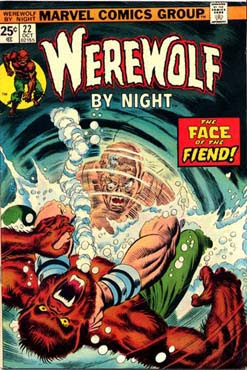
His first Marvel work was as a colorist for Werewolf By Night #22 in October of 1974.  He colored a number of books in his early months with the company, including Avengers #129.

Bill Mantlo would ultimately be known for his writing and that started with The Deadly Hands of Kung Fu # 7 (December 1974), in which he wrote "Tigers in a Mind Cage."  He continued writing for the black and white mag Deadly Hands of Kung Fu for many issues while continuing his coloring duties for the comic book lines.  Along with George Perez, Mantlo created the White Tiger in December of 1975 for the magazine.
Mantlo's first writing work for the mainstream comic line, was in Adventure into Fear with The Man Called Morbius The Living Vampire #29 (Phew... that is quite a title). The story Mantlo wrote was "Through a Helleyes Darkly." It was cover dated August of 1975.

In the early going, Mantlo was assigned stories with a horror theme like the Morbius tale.  He wrote The Frankenstein Monster #18, and when he got his first shot with a Marvel hero - it was the Thing teamed up with the Golem in Marvel Two-In-One #11.


Mantlo was already showing his proficiency, having only been with Marvel for about a year. He quickly took on a lot of work.  By the latter half of 1975, he was writing multiple books per month and was involved with Iron Man, Marvel Chillers, Power Man, Marvel Two-In-One, Marvel Premiere (with Hercules), and Astonishing Tales (starring Deathlok).  He also wrote issues of Thor and The Defenders.


At only 23 or 24 years old, Mantlo had made a name for himself as a quick study and also capable of quick turnaround for single issues and fill-in issues.  In an era when the "Dreaded Deadline Doom" seemed to encroach on the monthly distribution for numerous titles, Bill Mantlo was cranking out story after story.  He even plotted Uncanny X-Men #96 to be scripted by Chris Claremont.


Some of my favorite Mantlo penned stories include his work in Marvel Premiere with the story of Woodgod, as well as his work on the Champions, and for the "real life" heroics of The Human Fly.
Mantlo was not afraid to take on new challenges while also being extremely creative within the sandbox that Marvel supplied.   He frequently created brand new characters and was not intimidated by licensed properties (which would ultimately bring him his greatest recognition and success).


His imagination and creativity knew no bounds during his prolific tenure.  As I noted in a previous panel discussion, Bill Mantlo created the Jack of Hearts.  Also along the way he created characters like the Soviet Super-Soldiers, the U-Foes, and even Rocket Raccoon.  If you did not know, Rocket made his debut during Mantlo's run on the Hulk. His hand was also in the development of Cloak and Dagger.


In 1979, Mantlo took two licensed properties and developed comic runs that are among my favorites of the Bronze Age.  The Micronauts and ROM Spaceknight arrived, confronted with my typical skepticism that would accompany any toy generated characters of the time.  My Marvel super-hero elitism was showing, but when I was exposed to the complex "toy" stories which included ties to Marvel mainstream characters, I liked the books immensely  From Inner Space to the southeastern U.S., the Micronauts were revolutionaries fighting against the tyrannical Baron Karza and avoiding the deadly Body Banks while searching for some sort of galactic meaning.   Meanwhile, ROM of Galador fought the shape shifting scientific sorcerers, the Dire Wraiths.  Both had campy B-movie serial elements, but both also had some significant depth of characterization and layered plots.  Mantlo wrote the entire series of both ROM and Micronauts uninterrupted; he was truly the auteur of those runs.


As mentioned, Mantlo worked on The Hulk for a while.  He also took over the writing chores on Alpha Flight when John Byrne left the book.  In my opinion, those are lesser efforts as I felt that Mantlo was a more in depth writer who employed layered character development more frequently when the characters were of his making.
Here are some samples of of pages using his scripts and dialogues.   I think that he bridged the hammy explanatory wordiness of the Silver Age with the eloquence and complexity of the Bronze Age nicely.  


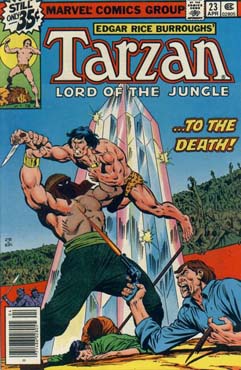
Shown below are just a handful of the hundreds of comic book stories that Bill Mantlo penned.  From Tarzan to Howard the Duck, from Ghost Rider to Red Sonja, from Man From Atlantis to the Yancy Street Gang, Mantlo was there.
  
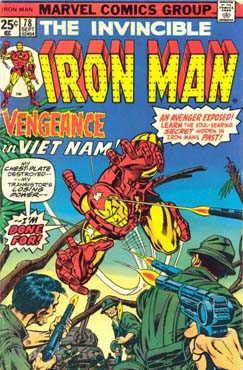
Among my favorites are the Iron Man issues depicted; they are from the conclusion of the Midas arc.  I feel it set a mood for the book that was carried on during the Michelinie-Layton days.  One criticism that I have heard about Mantlo is that he had so many ideas that it disrupted his execution; the ideas were flowing so fast that they did not have time to mature to be explored in full.   I tend to disagree; I think he used language and the pace of the story to keep the reader enraptured.  And I think he did it well.  He didn't linger too long on the minutia.  It may not have been "high art" but it was entertaining comic reading.  Some of his stories are definitely better than others; sometimes it is very apparent he was under a deadline and cranking out the issue.   But in other cases, I find the comics very compelling.


In the 1980s, Bill Mantlo attended law school and began work as a public defender.  Unfortunately, he was the victim of a hit-and-run while he was rollerblading.  He remains in assisted care to this day.   Bill Mantlo definitely brought me hours and hours of enjoyable fantastic tales through Marvel Comics.  I miss his input on the medium tremendously; and I wonder what he would have given us if he had continued writing.  If you are curious about his comic impact, check out Mantlo, A Life in Comics.  It was authored by his brother Michael and David Yurkovich (I believe some of the proceeds go toward Bill's care).

So what do you think about Bill Mantlo's influence on the Bronze Age of comics?  Are any of his books in a stack of your favorites?  How did his writing stack up against the greats - in your opinion?  What would you have liked to have seen more of (or less of) from Mantlo?    Share your thoughts on the man, his writing art, the comics he created, and his influence today at BitBA!  Cheers!

You Might Also Like --

Here are some related posts: